Las Vegas Residential Plumbing Challenges
Owning a home in Las Vegas comes with a pretty fantastic set of perks — sunshine practically every day, a lively community, and no shortage of things to do. But it also comes with a unique set of residential plumbing challenges that most other cities don’t have to deal with quite the same way.
Hard water. Scorching summer heat. Older neighborhoods with aging pipes. Strip mall developments that push local infrastructure to its limits.
Sound familiar? You’re not alone. The good news is that most common home plumbing issues are totally manageable — as long as you know what to watch for and have a trusted local plumber in your corner. This guide is your go-to resource for understanding residential plumbing in Las Vegas, from everyday maintenance to knowing exactly when it’s time to make the call.
Any questions? Contact the residential plumbing experts at Pentagon Plumbing. We’re happy to help!
Why Las Vegas Residential Plumbing Is a Different Beast
Most homeowners across the country deal with plumbing problems that are, well, pretty standard. Las Vegas homeowners deal with all of those plus a few regional curveballs.
Hard Water: Las Vegas’s Most Persistent Plumbing Problem
If you’ve ever noticed white, chalky buildup on your faucets or shower heads, you’ve already met Las Vegas’s most notorious plumbing villain: hard water. The Las Vegas Valley draws its water supply primarily from Lake Mead, which carries a high concentration of calcium and magnesium minerals.
Over time, these minerals accumulate inside your pipes, water heater, and appliances — a process called scale buildup. Left unchecked, hard water can:
- Reduce water flow and pressure
- Shorten the lifespan of your water heater by years
- Damage dishwashers, washing machines, and refrigerator ice makers
- Make soap and shampoo less effective (yes, really)
The fix: A whole-home water softener is one of the best investments a Las Vegas homeowner can make. It extends the life of your plumbing system and appliances, and your showers will honestly feel so much better.
Extreme Heat and Your Pipes
Las Vegas summers are no joke — triple-digit temperatures are the norm, not the exception. That kind of heat affects your plumbing in ways you might not expect. Outdoor pipes and hose bibs can expand and crack. Water heaters work overtime. And if your home sits on a concrete slab (as many Las Vegas homes do), temperature-driven soil movement can stress underground pipes over time.
Routine plumbing inspections each spring are a smart way to catch heat-related wear before it becomes a bigger problem.
The Most Common Residential Plumbing Problems in Las Vegas Homes
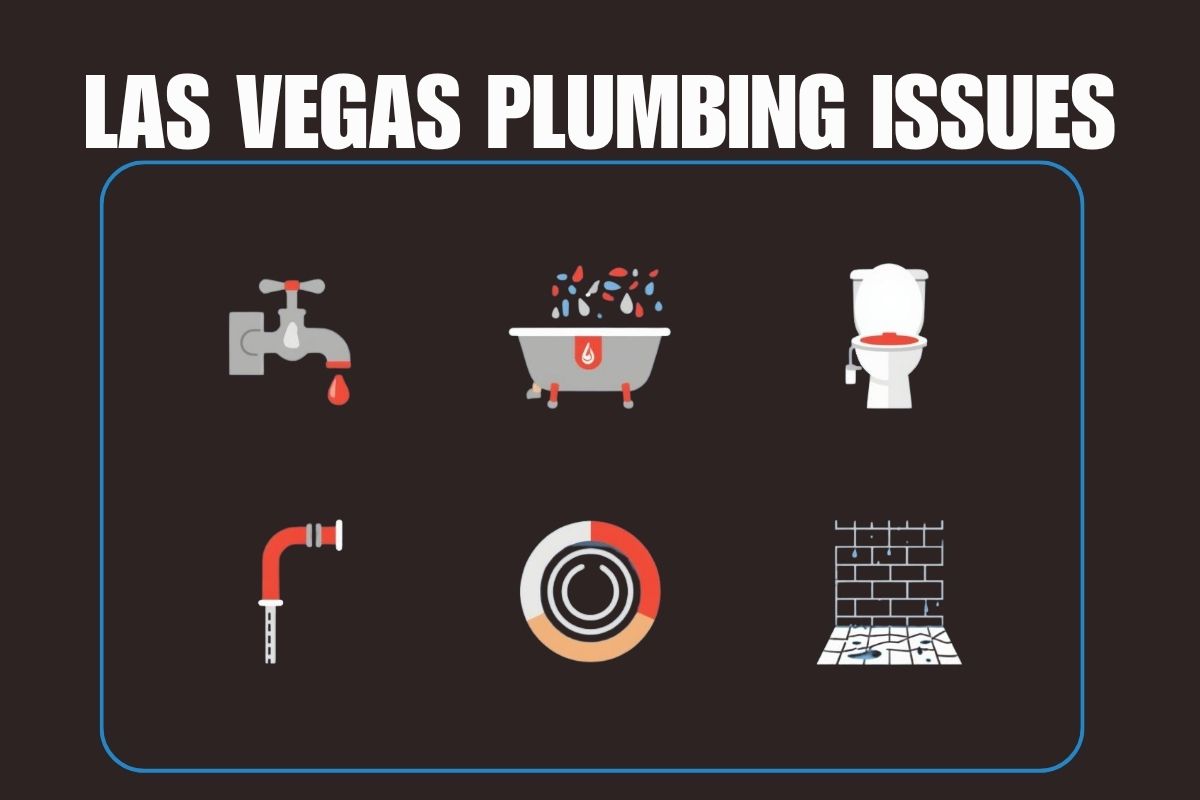
1. Low Water Pressure
Low water pressure is one of the most common complaints we hear from Las Vegas homeowners — and it’s usually a symptom, not the root cause. Possible culprits include:
- Scale and mineral buildup in pipes or at the pressure regulator
- A partially closed main shutoff valve
- A leak somewhere in the supply line
- A failing pressure regulator valve (PRV)
If you’re noticing weak flow at just one fixture, the aerator (the small mesh screen on your faucet) is often the first place to check — it can get clogged with mineral deposits quickly in our hard-water environment.
2. Slow or Clogged Drains
Kitchen and bathroom drains are workhorses that take a lot of abuse. Grease, soap scum, hair, and food particles are the usual suspects. What starts as a slow drain can escalate to a full blockage if ignored.
A word of caution: store-bought chemical drain cleaners can actually damage older pipes and are rarely a permanent solution. Professional drain cleaning — whether with a drain snake or hydro-jetting — is faster, safer, and more effective.
3. Running or Leaking Toilets
A toilet that runs constantly can waste hundreds of gallons of water per day, silently inflating your water bill. Usually the culprit is a worn flapper, a faulty fill valve, or a damaged flush handle assembly — all relatively simple repairs. If you notice water pooling at the base of your toilet, the wax ring seal may need replacing.
4. Water Heater Issues
Las Vegas homes rely heavily on water heaters, and hard water is their nemesis. Sediment buildup inside the tank causes popping and rumbling sounds, forces the heater to work harder, and ultimately shortens its lifespan. Annual tank flushing can extend the life of your water heater significantly.
Signs your water heater may need attention:
- Inconsistent water temperature
- Rust-colored or metallic-smelling hot water
- Water pooling near the base of the unit
- The unit is 10+ years old
Worth considering: Tankless water heaters are increasingly popular in Las Vegas homes. They heat water on demand, take up less space, and can be a smart upgrade — especially when paired with a water softener to prevent scale buildup in the unit.
5. Slab Leaks
This one is uniquely common in the Las Vegas area. A slab leak occurs when the pipes running beneath your home’s concrete foundation develop a leak. Signs include warm spots on your floor, unexplained spikes in your water bill, the sound of running water when nothing is on, or cracks appearing in walls or flooring.
Slab leaks require prompt professional attention — they’re not a DIY fix, and they won’t get better on their own.
Smart Residential Plumbing Maintenance Tips for Las Vegas Homeowners
A little preventive care goes a long way toward avoiding major plumbing repair bills. Here’s a practical maintenance checklist:
- Inspect supply lines under sinks and behind toilets annually — rubber lines crack over time and can cause significant water damage when they fail
- Flush your water heater once a year to remove sediment buildup
- Check your PRV (pressure regulator valve) — ideal home water pressure is between 40–60 PSI; anything above 80 PSI can stress your pipes
- Clean faucet aerators and shower heads every few months to remove mineral deposits
- Know where your main water shutoff valve is — this is the single most important thing every homeowner should know
- Schedule an annual plumbing inspection to catch problems early, before they become expensive
When to DIY vs. When to Call a Licensed Plumber
Some plumbing tasks are genuinely homeowner-friendly. Replacing a faucet aerator, unclogging a slow drain with a drain snake, or swapping a toilet flapper are all reasonable DIY projects if you’re reasonably handy.
But some jobs should always go to a licensed residential plumber:
- Any work involving your main water line
- Gas line connections (water heaters, stoves)
- Slab leak detection and repair
- Pipe replacement or re-piping
- Water heater installation
- Any project requiring a permit
- Anything you have to search YouTube to learn how to fix
In Nevada, plumbing work beyond basic repairs requires a licensed contractor. Beyond the legal angle, improper plumbing work can void your homeowner’s insurance coverage — so it’s worth doing it right the first time.
FAQ: Residential Plumbing in Las Vegas
How often should I have my home plumbing inspected in Las Vegas? Most plumbing professionals recommend an annual inspection for Las Vegas homes, given the hard water conditions and extreme heat. Homes with older pipes or a history of slab issues may benefit from more frequent check-ins.
What’s the best way to deal with Las Vegas hard water and my plumbing? A whole-home water softener is the most effective long-term solution. It removes calcium and magnesium ions before they enter your plumbing system, dramatically reducing scale buildup in pipes, fixtures, and appliances. Pairing it with regular water heater flushing keeps your system running efficiently.
How do I know if I have a slab leak in my Las Vegas home? Common warning signs include a sudden, unexplained increase in your water bill, warm or wet spots on your floor, the sound of water running when all fixtures are off, or new cracks in walls or the foundation. If you suspect a slab leak, call a licensed plumber for professional leak detection — the sooner it’s caught, the less damage it causes.
How long do home water heaters last in Las Vegas? Due to hard water, water heaters in Las Vegas often have a shorter lifespan than the national average of 8–12 years. With regular maintenance (annual flushing, anode rod inspection), you can extend that. Tankless water heaters, while more efficient, also need periodic descaling in hard-water environments.
What should I do if I suddenly have no water pressure in my home? First, check if neighbors are also affected — it could be a city supply issue. If it’s isolated to your home, check that your main shutoff valve is fully open. If pressure is low throughout the house (not just one fixture), your pressure regulator valve may have failed, or there could be a leak in your main line. Call a plumber if you can’t identify an obvious cause.
Pentagon Plumbing: Las Vegas’s Residential Plumbing Experts
At Pentagon Plumbing, we’ve spent nearly two decades serving homeowners across the Las Vegas Valley — from Henderson to Summerlin, North Las Vegas to the heart of the city. We understand the specific challenges that come with plumbing in this region, and we approach every job with the same values that guide everything we do: Honor, Service, Excellence, and Patriotism.
Whether you’re dealing with a nagging slow drain, a water heater that’s seen better days, or a suspected slab leak, our licensed residential plumbers are ready to help.
Give us a call today for a free estimate — or fill out our quick online form and we’ll get back to you promptly. No pressure, no runaround. Just straightforward, honest plumbing service from a local Las Vegas company that’s proud to serve this community.